Saves Center
  • Newsletter
  • Home
  • About
    • Overview
    • Our Team
    • Demonstration Sites
  • Resource Library
  • Get Help
  • SAVES Learning Community
  • Contact Us
Toggle navigation menu.
  • Newsletter
  • Home
  • About
    • Overview
    • Our Team
    • Demonstration Sites
  • Resource Library
  • Get Help
  • SAVES Learning Community
  • Contact Us

Meaningful Engagement and Partnership With Survivors of Domestic Violence to Improve Safe Access to Child Support Services

The Importance of Involving Survivors of Domestic Violence in Child Support Improvement Initiatives

The design and functioning of the child support system directly affect the safety and well-being of survivors of domestic violence (DV) and their children. These effects can range from extremely helpful (e.g., increased disposable income, financial stability) to extremely harmful (e.g., child support enforcement triggering retaliatory violence, unsafe parenting time for children). Despite previous efforts to improve child support processes (e.g., Family Violence Indicator, Good Cause determinations, staff trainings), many survivors continue to fear negative consequences of pursuing child support. To create effective and safe processes for survivors of DV, it is crucial to engage survivors and DV advocates, programs, and coalitions in the co-design and evaluation of modifications to the current child support system. Engaging survivors and DV experts in co-design of child support improvement initiatives creates unique opportunities to advance the safety and accessibility of the system for survivors.

Co-design is a transformative approach that challenges conventional power dynamics in which decisions are made on behalf of a group without input from those most affected. It emphasizes collaboration with those who are most connected to or impacted by a particular issue or policy and places relationships at the forefront. Further, co-design thrives on transparency and shared power and strikes a balance between aspiration and practicality, thereby shaping programs and policies that genuinely resonate with survivors.

This document presents concrete tips for child support agencies on how to meaningfully engage and partner with survivors of DV. First, we provide overall strategies to support survivor well-being and empowerment throughout the initiative lifespan. Then, we share concrete tips for each phase of a child support services improvement process: planning, design, implementation, and performance monitoring.

Creating Meaningful Opportunities for Survivors to Share Their Expertise

Authentic co-design with survivors requires breaking down the power dynamics at play in any process that involves professionals and families. Survivors of DV are the experts on how the child support system impacts their families, while child support professionals understand how the system currently functions, including policies, technology, and political climate. Equitable partnerships value both impact expertise and technical expertise. To counter business-as-usual approaches—in which holders of professional expertise are sole decision makers and priority-setters—child support agencies should identify and implement mechanisms to uplift survivors’ power and decision-making influence within planning, design, implementation, and performance monitoring.

The degree to which survivors are involved and supported in the co-design of system enhancements may ultimately determine how transformative those modifications will be. Agencies should strive to engage multiple survivors in a variety of ways, both so that survivors can support each other and to avoid a narrow view of what survivors need. Agencies should ask survivors how they want to be involved (e.g., consultant, advisory group member) and allow flexibility in roles, as capacity and needs may shift over time.
Consider creating opportunities for survivors such as the following:

  • Serving on a core leadership team that establishes the vision and values for the program and holds decision-making authority about strategic direction and priorities
  • Joining an advisory group that informs the design of policy and practice enhancements, receives regular progress updates, and acts as ambassadors for the initiative
  • Acting as a key informant through qualitative interviews or focus groups with racially and ethnically diverse survivors and DV advocates
  • Completing surveys
  • Engaging in evaluation activities, performance monitoring efforts, and interpretation (i.e., “meaning making”) of results

Regardless of how survivors are involved in child support improvement initiatives, center their voices and experiences when articulating the initiative’s values and in decision making.

Partnerships with survivors of DV to improve child support services also require sensitivity to the trauma that they and their children have experienced. This guide outlines survivor-centered and trauma-informed strategies that prioritize the well-being and empowerment of survivors and their children throughout the process of implementing and evaluating child support system enhancements.

Barriers That Survivors Face

Survivors of DV face several potential barriers to accessing and navigating the child support system posed by the system’s structure and service provision, as well as by their own interpersonal relationships. Because many child support staff do not have extensive experience in engaging people with lived experience of DV, it is important that they begin by reflecting on their practices and working intentionally to change their mindsets.

Some habits/norms of U.S. culture or within the child support system have led to this practice gap, including:

  • Privileging professional experience over lived experience
  • Understanding low-income status or receipt of public benefits as resulting from lack of individual effort (“pulling oneself up by the bootstraps”)
  • Believing that systems are inherently neutral in their impact
  • Operating from a sense of urgency (“we only have five years,” “we are on a timeclock to open a case”)
  • Psychological constructs that promote “savior” thinking, which frames survivors only as people “who need to be saved” and does not acknowledge survivor resiliency, skills, and agency (in this framework, professionals are “saviors” who don’t have any of their own needs, boundaries, personal triggers, etc., and are solely meant to fix and repair the situation for the survivor, not with the survivor)

In agencies’ genuine efforts to collaborate with survivors of DV to address the child support system’s structure and service provision, it’s crucial to remain vigilant against potential pitfalls that could hinder progress. A key concern is avoiding tokenism by actively involving a substantial and diverse group of survivors in the improvement initiative, fostering a more inclusive approach, and creating balance between professional insights and survivor experiences. Agencies should dedicate time to cultivating a shared comprehension of the system’s dynamics and its unique effects on survivors, thereby ensuring that their perspectives are fully understood. To amplify the impact of partnerships, it is important to engage survivors from the outset, aligning the initiative’s direction and scope with their valuable insights. Rather than dismissing possibilities (e.g., saying certain things “just can’t be done”), teams must explore creative avenues to overcome challenges and reframe constraints as opportunities for innovative problem-solving.

Survivors within the child support program may face additional interpersonal challenges that affect their overall experiences. It’s common for survivors of DV to maintain contact with an abusive ex-partner due to child support obligations, custody arrangements, parenting time needs, or involvement with child welfare agencies. Unfortunately, these connections can open doors to ongoing harassment, coercion, and control by the ex-partner and lead to logistical and emotional hurdles that make consistent participation within human services programs a struggle for survivors. These very challenges often dissuade survivors from even considering child support assistance in the initial stages.

Some survivors face additional barriers

While not all state child support agencies have historically collected sufficient demographic information to understand who is receiving services, we do know certain information based on impacts that are tracked in other public systems. For example, it is a near-certainty that Black/African American, Latina/o, Native American, Native Hawaiian, and Alaska Native survivors are impacted quite differently by the child support system than most White survivors. Race and ethnicity are correlated with income status in the United States,1  which has only been exacerbated by the COVID-19 pandemic.2 Furthermore, DV and poverty often trap survivors in abusive relationships.3,4 Intersecting and compounding disparities in opportunities for civic engagement, employment, education, financial security, and housing stability create intergenerational, structural poverty that disproportionately impacts survivors of color and survivors with low incomes.

Survivors of DV from historically underserved communities may be more in need of child support and may experience more negative consequences by seeking support. Survivors with disabilities, immigration issues, or whose first language is not English face additional barriers in accessing public systems in the United States. Any differential impact on survivors from these communities is likely to be exacerbated at the points at which child support intersects with other systems such as Temporary Assistance to Needy Families (TANF) and child welfare. Throughout this document, the term survivors marginalized by public systems will be used to describe survivors who face barriers because of their race, ethnicity, gender identity, poverty, disability status, language access, and so on.

One strategy for ensuring that enhancements to child support processes do not perpetuate disproportionate access to services is to use a targeted universalism approach in which survivors who are marginalized by public systems are centered in improvement initiatives. For more information on targeted universalism, check out the Othering and Belonging Institute at UC Berkeley.

Strategies and Tips for Meaningful Engagement of Survivors of DV

1. Support survivor well-being and empowerment.

Although partnering with survivors in child support improvement initiatives may require extra time and effort, it is critical that agencies aim to increase the availability and safety of child support for more survivors of DV. The following are guidelines for promoting survivor well-being and empowerment in a child support initiative. Formalizing these or similar guidelines as commitments among participants in the initiative can provide a useful container for collaboration (i.e., this formalization provides a clear set of boundaries or parameters for shared responsibility and team learning, and equalizes power).

Engage survivors continuously and long-term, rather than seeking their input on a one-time or inconsistent basis. Ongoing engagement builds trust, maximizes the opportunity to truly understand what survivors and their children experience in the child support system, and invites healthy accountability for the improvements underway.

Compensate survivors who are ongoing team members and offer incentives to survivors who participate in surveys or interviews. This practice can demonstrate that survivors’ time and contributions are valued and necessary.

Be prepared to offer material and emotional support for survivors involved in the initiative. Material support might include transportation, child care reimbursement, or technical support to facilitate their participation in virtual meetings. Emotional support might be provided by a DV advocate or a clinician who is also a partner in the initiative.

Create partnerships with agencies and seek out resources that can support survivors’ holistic participation through legal aid, child care assistance, housing stabilization, financial literacy, etc.

Protect survivors’ privacy, even though it might not always be possible to assure complete confidentiality. Agencies can consult with their General Counsel’s Office to determine what information is private versus public for survivors participating in the initiative. Sharing confidentiality practices and limits to confidentiality promotes survivors’ agency to determine their level of participation given their own understanding of their personal risks.

  • Some meeting materials may be subject to a public records request. Discuss the specifics with survivors and establish a written agreement that outlines what steps will be taken to protect their privacy, whether there are any limitations to privacy, and options for revoking the agreement.
  • Establish an agreement about prioritizing the sensitivity of personal stories while using the insights from those experiences to guide and inform the work.
  • Promote autonomy and confidentiality by allowing survivors to choose whether and how to share their stories and experiences.
  • Allow for anonymous participation, when feasible, to continue to elevate the experiences of survivors.

Develop culturally sensitive and inclusive methods to partner with survivors with different cultural backgrounds, languages, and abilities. Methods may include meeting only in accessible spaces, creating space and time in meetings for social connections and food, using interpreters, communicating by phone or in-person rather than exclusively through email, allowing for virtual or hybrid meeting participation, etc.

Create meeting spaces that share power amongst all members through intentional development of agendas, shared facilitation responsibilities, equitable participation, accessible communication methods, etc.

Establish agreements about how decisions will be made when consensus is not possible. One example is to employ a Gradients of Agreement process, with a caveat that if survivors believe that a particular decision will cause harm to them or their children, the process will be paused for consultation with others (e.g., legal staff, grant monitor, federal partners, etc.).

2. Involve survivors in all phases of child support improvement initiatives.

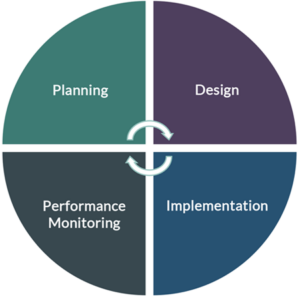
To build trust, share knowledge, and ensure that a range of survivor perspectives and experiences are accurately represented, involve multiple survivors in all phases of the initiative. The figure below represents typical phases of an initiative: planning, design, implementation, and performance monitoring. Continue to use the strategies shared above in “Support survivor well-being and empowerment” throughout all the phases described below.


Phase 1: Planning

The planning stage of a child support improvement initiative involves listening to survivors’ perspectives on their and their children’s needs, analyzing available data, and co-defining the problem(s) and the root causes of the problem(s) that the team wants to solve. This stage also involves engaging with others to think creatively about what might be done to address the issue, considering both short- and long-term solutions. Proposals and grant applications are usually developed at this stage and outline the initiative’s goals, objectives, and proposed outcomes. Be sure that the initiative’s goals are focused on improving outcomes and experiences for both survivors and their families.

Strategies for Partnering With DV Survivors in the Planning Stage

Connect with DV advocacy organizations (e.g., local DV organizations, a state DV coalition) to learn what they know about survivors’ experiences in the child support system and plan for directly engaging survivors.

Prioritize diversity in recruitment efforts—across race, sexual orientation, ability, ethnicity, etc.—for survivors and other members of the project team or advisory board. This could include working with culturally specific DV partners to recruit survivors, public recruitment efforts, and promotion through professional networks or other partner agencies.

Include funding for survivor compensation in proposal/grant applications and consider how funds will be distributed to survivors (e.g., directly through your organization, through a DV partner, etc.). Funding should include compensation for ongoing survivor participation and incentives for one-time data collection efforts (e.g., surveys, focus groups, interviews).

Invest time in team development and relationship building to ensure that everyone participating in the initiative has a baseline understanding about roles, responsibilities, and funder requirements. Ensure that everyone has a voice in setting group norms and initiative goals.

Be transparent. Survivors should be made aware of how their insights will be incorporated, what roles they will have, and what roles staff will have.

Utilize a trauma-informed approach to gather initial information in ways that do not place a heavy burden on survivors. For example, consider that surveys can be onerous for survivors, who must provide information and relive their trauma alone. While more time-intensive, consider conducting individual interviews or focus groups and asking open-ended questions:

  • How was your experience applying for child support?
  • What made your experience challenging?
  • What would you have liked to see instead?

Data or research can be used to contextualize the experiences of survivors. However, it is important to avoid prioritizing research and data at the expense of survivors’ voices. Remember that research is often not conducted with communities that have traditionally been marginalized and therefore might not be fully representative of people’s experiences.

When the data contradicts survivors’ reports, make note of the discrepancy and bring the team together to discuss implications for the initiative. Having conversations with survivors about why the data seems to contradict reported experiences can be enormously helpful. Survivors may be able to identify ways in which the study’s recruitment methods were not comprehensive, its measures were irrelevant, or in which other accessibility issues prevented full participation, etc. After discussion, the team can collectively decide how to best make sense of the data and how to use it.

Phase 2: Design

In the design stage of a child support improvement initiative, the team takes the solutions developed during planning and creates a detailed plan to implement them. After determining the specific interventions or strategies that will be implemented, the team will set measurable goals and objectives and identify the necessary resources and people who must be involved to ensure successful co-design. During this stage, agencies should keep the needs and perspectives of survivors of DV at the forefront. Otherwise, this is a stage in which survivors’ voices may not be fully incorporated as project managers take the lead in designing implementation plans.

Remember that there is a difference between requesting feedback and co-designing. Seeking feedback entails giving a plan to someone and asking for their opinion. Co-designing with survivors means that survivors have equal input and decision-making influence on what goes into an implementation plan, what is prioritized, and what strategies will be tried out. Nonetheless, co-designing initiatives with survivors can be challenging because of bureaucratic barriers such as mandated branding, clearance processes, communications rules and regulations, and leadership expectations and oversight. If this is the case, be as transparent as possible about your limits on co-designing.

Strategies for Partnering With DV Survivors in the Design Stage

Collectively map the touchpoints at which key child support decisions are made and at what points child support intersects with other systems (e.g., courts, TANF, child welfare, etc.). Create space for survivors to share how they are impacted at those touchpoints.

Define the anticipated policy and practice changes (e.g., in child support, courts, DV programs, etc.) that will lead to improved outcomes and experiences for survivors and their families. Without this clarity at the design stage, results will be harder to evaluate.

Recognize the lived expertise of survivors in creating new tools (i.e., screeners) and procedures (i.e., desk aids, policies, information memos). Survivors can lead the development of screening/application questions, plain language explanations, and public-facing documents about child support.

Engage survivors in framing the initiative’s research questions and performance monitoring design, including recruitment strategies, materials, survey questions, data collection methods, etc.  

Collaborate with DV advocacy organizations to co-develop proposed interventions and strategies. This way, the initiative can ensure that the proposed strategies complement, rather than detract from or undermine, efforts that DV agencies are undertaking on behalf of survivors.

Evaluate each proposed solution through the lens of how it will impact culturally specific communities and survivors who are marginalized by public systems. Engage people and programs from identified groups and ask targeted questions:

  • Would any of these proposed strategies harm survivors in the community? How?
  • How might these proposed strategies benefit survivors and their children?
  • How would you modify any of the proposed strategies for this initiative?

Respect feedback on proposed solutions. If you receive information that a proposed solution may or will harm survivors or their children from a specific community/group, do not move forward with those ideas. Consult with legal counsel and federal partners and explicitly state that you have received input that the proposed strategies will harm survivors or their children. Ask for their suggestions on how to address those concerns, and/or how to advocate for eliminating that mandate.

If you still must move forward, be fully transparent about the regulatory or statutory mandates that leave you no other option but to employ those harmful strategies at the present time.

Use a variety of communication methods, including visual aids and multimedia strategies, to present the initiative design in an engaging and accessible way. For in-person meetings, provide copies of all handouts and meeting materials, as not everyone may own or bring a personal device.

Design multiple ways for survivors to provide input (e.g., written, verbal, online input; interviews, surveys, focus groups; anonymous participation opportunities where feasible; etc.).

Phase 3: Implementation

The implementation stage of a child support improvement initiative is where the initiative’s design is put into action. This stage typically includes hiring and training staff, coordinating with partners, and carrying out activities and services—all with a focus on creating conditions to achieve the initiative’s goals and objectives. Trying out new processes, procedures, and tools in this stage allows the team to see how the changes are working and to adjust as needed. Focusing on survivor perspectives and experiences at this stage ensures that the initiative is having a positive impact on the lives of survivors and their children.

Strategies for Partnering With DV Survivors in the Implementation Stage

Invite survivors to join the hiring process for new project staff. Consider asking survivors to draft and review interview questions, screen applications, and sit on the interview panel. The staff being hired are there to serve the community and the “customer” (i.e., survivors and their families) should have a say in hiring staff who will work on their behalf.

Include survivors in trainings, or as trainers, for the initiative. Elicit information from survivors about what child support staff need to know about DV and their experiences with the child support system; integrate this knowledge into training. Request survivor feedback and incorporate modifications into future training modules and sessions. 

Keep survivors and other constituents informed about the progress of the initiative through team meetings, regular updates on a website or social media page, newsletters, or other accessible communication channels. Include mechanisms for survivors to provide feedback and suggestions throughout implementation.

Co-design solutions to implementation challenges with the entire team, including survivors. During the implementation phase, agencies may need to adjust the initiative’s plan. Ensure full team approval before making changes.

Utilize your agreed-upon, shared decision-making process to ensure that the initiative remains responsive to survivor needs and perspectives. If survivors tell you that an initiative practice or deliverable is harmful, listen to this feedback and stop immediately.

Document this input and consult with other partners (e.g., federal partners, legal counsel, grant monitors, etc.) to help you pivot to different practices.

Create opportunities for survivors to give feedback and suggest improvements to the initiative as it is being implemented through surveys, interviews, or other methods.

Continue building and deepening relationships with survivors, DV programs, and other community partners that focus on sustaining the initiative and its impact beyond the initial implementation period.

  • Identify ways to continue the work of the initiative over the long term and ensure that it has a lasting and positive impact on survivors and the broader community.
  • Be transparent from the beginning about what happens when the initiative ends to build trust and generate new ideas about how to ensure the initiative’s sustainability.
  • Identify what initiative actions, services, or supports qualify as core child support activities and work with your financial team to incorporate these into the annual child support budget. Consider blending and braiding funding to extend the impact and duration of initiative activities.

Phase 4: Performance Monitoring

The performance monitoring stage of a child support improvement initiative involves assessing the effectiveness of the implemented solutions and measuring the outcomes against the initiative’s proposed goals and objectives. This phase may include continuous quality improvement and evaluation activities. The outcomes derived from performance monitoring initiatives frequently result in adjustments to policies, alterations to funding mechanisms, revisions to procedural protocols, and other related modifications. Engaging survivors during this stage can yield important information about the effectiveness of the initiative, additional gaps in services, unintended consequences of policy and procedure modifications, and potential ways to improve the initiative in the future. Communicate performance monitoring results with the broader survivor community and integrate their input into future planning and implementation.

Strategies for Partnering With DV Survivors in the Performance Monitoring Stage

Center survivors marginalized by public systems in evaluating the impact of child support enhancements and use this information to make additional improvements. Collect data on desired outcomes, such as improvements in survivors’ and children’s safety and well-being.

Involve survivors as partners in designing and administering the performance monitoring phase, including developing research questions and measures, collecting data, interpreting data, and disseminating results. Have survivors serve as expert reviewers for tools and measures and conduct cognitive interviews with survivors.

  • Ensure that surveys, interviews, and focus groups are conducted in a trauma-informed way. This may include allowing survivors to opt out of any questions they do not want to answer; giving them control of pacing; allowing for anonymous participation; and ending on questions about hope, resilience, and joy.
  • Engage survivors in the design of the recruitment process and strategies for increasing participation.

Communicate preliminary findings to the survivor community in a timely manner and provide opportunities for shared discussion and interpretation of the results.

Acknowledge the limitations and challenges of the performance monitoring process and recruit survivors to share their honest feedback on the strengths and weaknesses of the initiative, its implementation, and results.

Provide opportunities for survivors to co-design modifications or improvements to the initiative based on preliminary data, feedback, and findings to make them relevant, feasible, and effective.

Co-develop dissemination materials with survivors, especially but not exclusively those materials intended for other survivors. This activity builds capacity for survivors by creating shared ownership in the design and delivery of public-facing resources. Look for opportunities where survivors can take the lead—rather than simply give feedback—on various tasks, including creating the communication strategy and drafting materials.

Conclusion

Effective collaboration with survivors of DV is critical to the success of any initiative aimed at addressing their needs. To meaningfully engage survivors, involve them in the whole initiative—and not just in the portions that directly affect them. Instead, invite their full participation in the planning, design, implementation, and performance monitoring phases. By doing so, the initiative can be tailored to address the unique challenges faced by survivors of DV and their children and help ensure that they receive a menu of appropriate resources—rather than a prescriptive service model that professionals think is best suited to their needs and lived experiences.

Footnotes

1 Office of Federal Contract Compliance Programs. (n.d.). Earnings disparities by race and ethnicity. Washington, D.C.: U.S. Department of Labor. https://www.dol.gov/agencies/ofccp/about/data/earnings/race-and-ethnicity

2 Lopez, M. H., Rainie, L., & Budiman, A. (2020). Financial and health impacts of COVID-19 vary widely by race and ethnicity. Washington, D.C.: Pew Research Center. https://www.pewresearch.org/short-reads/2020/05/05/financial-and-health-impacts-of-covid-19-vary-widely-by-race-and-ethnicity/

3 The Atlantic. (n.d.). How Money Traps Victims of Domestic Violence. https://www.theatlantic.com/sponsored/allstate/how-money-traps-victims-of-domestic-violence/750/

4 Mao, B. (2022). To tackle violence against women, we need to alleviate poverty. Cologny, Switzerland: World Economic Forum. https://www.weforum.org/agenda/2022/11/to-take-violence-against-women-alleviate-poverty/

Funding for this project was approved by the U.S. Department of Health and Human Services, Administration for Children and Families, Office of Child Support Services, Grant Number 90FD0253, awarded to the Colorado Division of Child Support Services. Any opinions, findings, and conclusions or recommendations expressed in this material are those of the author(s) and do not necessarily reflect the views of the U.S. Department of Health and Human Services, Administration for Children and Families.

Authors:

  • Pierre Berastain
  • Shellie Taggart
  • Carisa Clinton

Published Date:

October 31, 2023

Categories:

  • Engaging people with lived experiences
  • Equitable systems change

Downloads

  • Brief
Saves Center
  • Home
  • About
  • Resource Library
  • SAVES Learning Community
  • Contact Us

The SAVES Center is a five-year project funded by the Office of Child Support Services, Administration for Children and Families, U.S. Department of Health and Human Services (Award #90FD0253-01-00). The content of this website and publications by SAVES Center staff do not necessarily reflect the views or policies of the Office of Child Support Services, the Administration for Children and Families, or the U.S. Department of Health and Human Services.

Copyright © 2026 Saves Center. All Rights Reserved.

  • Privacy Policy